
A Godly Legacy
And we know that God causes all things to work together for good to those who love God, to those who are called according to His purpose.
ROMANS 8:28
12/14/201411 min read
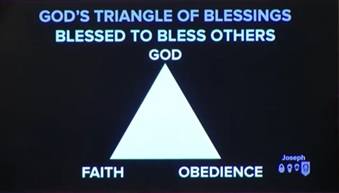
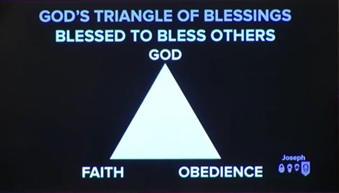
The image shows God’s Triangle of Blessings. At the top is God, reminding us that He is the source of every blessing in life. The two foundations of the triangle are faith and obedience. Faith means trusting God completely, and obedience is the evidence that our faith is real. Faith without obedience is not true faith, because genuine faith always leads to action. When our lives are centered on God and built on faith and obedience, we live inside God’s triangle of blessing—not only to be blessed ourselves, but also to become a blessing to others.
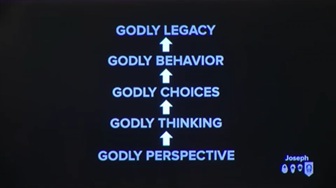
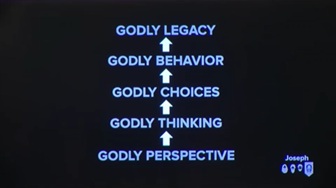
The image shows that a godly legacy begins long before the end of a person’s life. Legacy is built step by step. It starts with a godly perspective — seeing life through God’s truth and trusting His ways. A godly perspective shapes our thinking, and our thinking influences the choices we make every day. Our choices then form our behavior, and over time our consistent behavior becomes our legacy.
Legacy is something we leave behind for others. It may be material or spiritual, visible or invisible. Every person will leave a legacy, whether intentionally or unintentionally, for good or for bad. The question is not if we will leave a legacy, but what kind of legacy we will leave. What will our children remember about us? What will people remember when our lives are finished? A godly legacy is built when our perspective, thoughts, choices, and actions are continually shaped by God.
PRAYER
Heavenly Father,
Thank You for reminding us that You are the source of every blessing in our lives. Teach us to place our faith fully in You and to walk in obedience to Your Word. Help us understand that true faith is shown not only in what we believe, but in how we live each day. May our lives remain inside Your triangle of blessing — centered on You, grounded in faith, and strengthened through obedience — so that we may become a blessing to others.
Lord, help us build a godly legacy that honors You. Give us a godly perspective so we may see life through Your truth and trust Your ways. Shape our thinking, guide our choices, and transform our behavior so that our lives reflect Your character. May our children, families, and the people around us remember not just what we achieved, but how we loved You, trusted You, and pointed others to You.
Forgive us for the times we have failed, and continue to mold us into people whose lives bring glory to Your name. Help us walk by faith, forgive others, trust Your sovereignty, and hold firmly to Your promises. May the legacy we leave behind lead future generations closer to You.
In Jesus’ name,
Amen.
REUBEN — The Legacy of Compromise
GENESIS 49:3 “Reuben, you are my firstborn; My might and the beginning of my strength, Preeminent in dignity and preeminent in power. 4 Uncontrolled as water, you shall not have preeminence, Because you went up to your father’s bed; Then you defiled it—he went up to my couch.
Jacob began by recognizing Reuben’s privileged position as the firstborn. Reuben possessed great potential, dignity, and influence. However, his lack of self-control destroyed the future that could have been his. Jacob compared him to unstable water, emphasizing a character that could not be restrained or trusted. His moral failure became greater than his position.
This passage teaches that giftedness and privilege are never substitutes for character. A person may begin life with many advantages, but without self-control and obedience to God, those advantages can be lost. Sin always carries consequences that extend beyond the moment.
JACOB — The Legacy of Passing Down the Knowledge of God
GENESIS 48:1 Now it came about after these things that Joseph was told, “Behold, your father is sick.” So he took his two sons Manasseh and Ephraim with him... 9 Joseph said to his father, “They are my sons, whom God has given me here.” So he said, “Bring them to me, please, that I may bless them.”
As Jacob approached death, Joseph intentionally brought his sons to receive their grandfather’s blessing. This moment reveals that spiritual legacy must be passed on deliberately. Godly influence rarely happens accidentally.
Joseph understood the value of spiritual inheritance. Material blessings fade, but knowledge of God passed from one generation to another has eternal impact.
This passage teaches parents and leaders to intentionally guide the next generation toward God.
GENESIS 48:14 But Israel stretched out his right hand and laid it on the head of Ephraim, who was the younger, and his left hand on Manasseh’s head, crossing his hands, although Manasseh was the firstborn. 15 He blessed Joseph, and said, “The God before whom my fathers Abraham and Isaac walked, The God who has been my shepherd all my life to this day, 16 The angel who has redeemed me from all evil, Bless the lads; And may my name live on in them, And the names of my fathers Abraham and Isaac; And may they grow into a multitude in the midst of the earth.”
Jacob crossed his hands and gave the greater blessing to Ephraim, the younger son. Throughout Genesis, God repeatedly chose the unexpected person: Isaac over Ishmael, Jacob over Esau, Joseph over Reuben, and now Ephraim over Manasseh.
This pattern demonstrates that God’s ways are not controlled by human systems, status, or tradition. God acts according to His sovereign wisdom and grace.
More importantly, Jacob centered the blessing on God Himself. He described God as the One who guided, shepherded, and redeemed him throughout his life. Jacob had finally come to understand that God had been faithfully present through every struggle, failure, and season of uncertainty.
A powerful truth emerges here: we cannot pass on what we do not personally possess. Jacob could speak about God because he had walked with Him personally.
GENESIS 48:21 Then Israel said to Joseph, “Behold, I am about to die, but God will be with you, and bring you back to the land of your fathers.
Jacob’s final assurance to Joseph was not centered on wealth or success but on God’s presence. He declared that God would continue to be with them and fulfill His promises.
The greatest legacy Jacob passed down was confidence in God’s faithfulness. Circumstances change, people die, but God remains present with His people.
A godly legacy ultimately points others toward dependence on God rather than dependence on human strength.
JOSEPH — The Legacy of Faith and Forgiveness
GENESIS 50:15 When Joseph’s brothers saw that their father was dead, they said, “What if Joseph bears a grudge against us and pays us back in full for all the wrong which we did to him!” 16 So they sent a message to Joseph, saying, “Your father charged before he died, saying, 17 ‘Thus you shall say to Joseph, “Please forgive, I beg you, the transgression of your brothers and their sin, for they did you wrong.” ’ And now, please forgive the transgression… And Joseph wept when they spoke to him. 18 Then his brothers also came and fell down before him and said, “Behold, we are your servants.” 19 But Joseph said to them, “Do not be afraid, for am I in God’s place? 20 As for you, you meant evil against me, but God meant it for good in order to bring about this present result, to preserve many people alive.
Even after many years, Joseph’s brothers still feared revenge because of the evil they had committed against him. Their guilt remained heavy upon them. Yet Joseph responded with humility and faith instead of bitterness.
Joseph understood that vengeance belongs to God alone. By refusing revenge, he acknowledged God’s authority over his life. Faith allowed Joseph to trust that God could bring good even out of painful and unjust circumstances.
One of the clearest evidences of faith is the ability to forgive. Bitterness attempts to take God’s place by demanding personal justice, but faith releases judgment into God’s hands.
Joseph’s words reveal deep spiritual maturity: God’s sovereignty is greater than human evil. What others intended for destruction, God used for preservation and salvation.
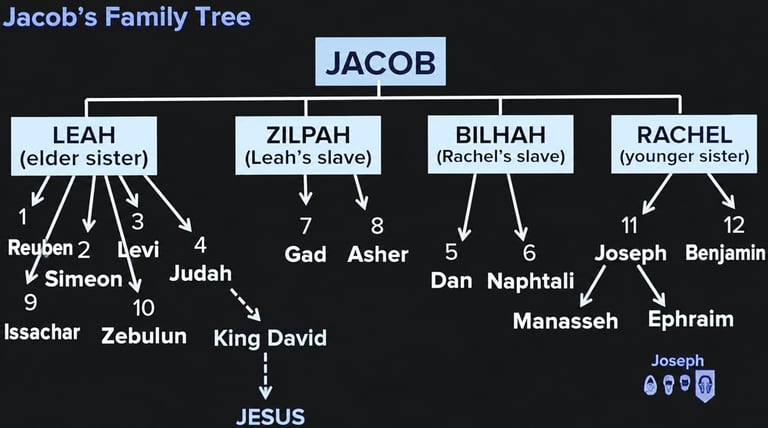
REVELATION 5:5 and one of the elders *said to me, “Stop weeping; behold, the Lion that is from the tribe of Judah, the Root of David, has overcome so as to open the book and its seven seals.”
The prophecy concerning Judah reached its fulfillment in Jesus Christ, called the Lion from the tribe of Judah. Jesus is the ultimate King who overcame sin and death.
Judah’s legacy became greater than earthly leadership; it became connected to God’s eternal redemption plan. From a broken man came a royal line that led to the Messiah Himself.
This reminds us that God can redeem a life so completely that future generations experience blessing because of one person’s surrender to Him.
1 CHRONICLES 5:1 Now the sons of Reuben the firstborn of Israel (for he was the firstborn, but because he defiled his father’s bed, his birthright was given to the sons of Joseph the son of Israel; so that he is not enrolled in the genealogy according to the birthright.
Years later, Reuben’s failure still affected his legacy. His birthright was transferred because of his sin against his father. Scripture shows that personal choices can influence future generations and alter what could have been a life of honor.
Reuben’s story reminds us that we are free to choose our actions, but we are not free from their consequences. Legacy is shaped not only by how a person begins life, but by the character they consistently live out.
JUDAH — The Legacy of Repentance and Transformation
GENESIS 49:8“Judah, your brothers shall praise you; Your hand shall be on the neck of your enemies; Your father’s sons shall bow down to you. 9 Judah is a lion’s whelp; From the prey, my son, you have gone up. He couches, he lies down as a lion, And as a lion, who dares rouse him up?
Judah’s early life was filled with failure, selfishness, and sin. Yet his story did not end there. Through repentance and transformation, Judah became a different man. Jacob’s blessing described him as a lion—a picture of strength, leadership, courage, and victory.
The image of a lion’s cub shows growth and development. Judah was not born spiritually mature; God transformed him over time. His willingness to change allowed God to redeem his life and use him for a greater purpose.
This teaches that our past does not have to define our future. God can transform even broken and sinful lives when there is genuine repentance.
GENESIS 49:10 The scepter shall not depart from Judah, Nor the ruler’s staff from between his feet, Until Shiloh comes, And to him shall be the obedience of the peoples.
Jacob’s prophecy moved beyond Judah himself and pointed toward the coming Messiah. The scepter symbolized kingship and authority, showing that leadership would remain connected to Judah’s line until the One who brings true peace would come.
“Shiloh” points to the promised Savior, the One who would ultimately establish peace between God and humanity. God’s covenant purposes were unfolding through Judah’s family line even though Judah himself had once failed greatly.
This passage reveals God’s sovereignty and grace. God often works through imperfect people to accomplish His perfect plan.
ROMANS 8:28 And we know that God causes all things to work together for good to those who love God, to those who are called according to His purpose.
God works through every circumstance for the good of His people. This does not mean every situation is good, but it means God remains sovereign over all things.
Faith trusts that nothing enters the life of God’s children apart from His knowledge and purpose. Even suffering can become part of God’s redemptive work.
This truth frees believers from living in anger toward circumstances or people because ultimate control belongs to God.
GENESIS 50:21 So therefore, do not be afraid; I will provide for you and your little ones.” So he comforted them and spoke kindly to them.
Joseph went beyond forgiveness and actively showed kindness to those who had wounded him. He comforted his brothers and promised to care for their families.
Faith does not merely avoid revenge; it overcomes evil with goodness. Joseph reflected God’s heart by responding with compassion rather than retaliation.
This demonstrates spiritual maturity that flows from confidence in God’s justice and provision.
ROMANS 12:19 Never take your own revenge, beloved, but leave room for the wrath of God, for it is written, “Vengeance is Mine, I will repay,” says the Lord... 21 Do not be overcome by evil, but overcome evil with good.
Surrender vengeance to God and respond to evil with goodness. Human revenge only multiplies sin, but trusting God allows believers to overcome evil in a godly way.
Joseph became a living example of this principle long before Paul wrote it. His life demonstrated that faith in God enables people to love even those who hurt them deeply.
JOSEPH’S FINAL LEGACY — DYING IN FAITH
HEBREWS 11:22 By faith Joseph, when he was dying, made mention of the exodus of the sons of Israel, and gave orders concerning his bones...
Joseph’s final recorded act of faith concerned his bones. Even as he faced death, his confidence remained fixed on God’s promises rather than Egypt’s prosperity.
His instructions showed that he believed Israel’s future was in the Promised Land, not in Egypt. Joseph viewed himself as part of God’s eternal covenant purposes.
Faith sees beyond present comfort and holds firmly to God’s promises.
GENESIS 50:24 Joseph said to his brothers, “I am about to die, but God will surely take care of you and bring you up from this land to the land which He promised on oath to Abraham, to Isaac and to Jacob.” 25 Then Joseph made the sons of Israel swear, saying, “God will surely take care of you, and you shall carry my bones up from here.”
Joseph reminded his family that God would one day bring them out of Egypt. His request concerning his bones symbolized his certainty that God would fulfill His word.
Joseph refused to let future generations become spiritually attached to Egypt. He wanted them to remember that this world was not their final home.
A godly legacy teaches future generations to place their hope in God rather than in temporary earthly security.
EXODUS 13:19 Moses took the bones of Joseph with him, for he had made the sons of Israel solemnly swear, saying, “God will surely take care of you, and you shall carry my bones from here with you.”
Hundreds of years later, Moses carried Joseph’s bones out of Egypt during the Exodus. Joseph’s faith continued to influence God’s people long after his death.
This reveals that God’s promises may not always be fulfilled within one lifetime, but God remains faithful across generations.
JOSHUA 24:32 Now they buried the bones of Joseph, which the sons of Israel brought up from Egypt, at Shechem, in the piece of ground which Jacob had bought…
Joseph’s bones were finally buried in the Promised Land after centuries of waiting. God fulfilled exactly what He had promised.
Joseph lived by faith, walked by faith, and died by faith. His life reminds believers that faith trusts God even when fulfillment is delayed for generations.
PRAYER
Heavenly Father,
Thank You for reminding us that every person leaves a legacy, and that a godly legacy is built through faith, obedience, repentance, and trust in You.
Lord, help us to keep You at the center of our lives, for You are the source of every blessing. Teach us to walk by faith and to show that faith through obedience to Your Word. Guard our hearts from compromise like Reuben, but give us hearts that repent and change like Judah. Help us, like Jacob, to intentionally pass on the knowledge of You to the next generation. And may we trust You in every circumstance, forgive others freely, and hold firmly to Your promises.
Shape our perspective, our thinking, our choices, and our behavior so that our lives will honor You. May our families, children, and the people around us see Christ in us. Let the legacy we leave behind point others closer to You and bring glory to Your name.
Thank You for Your faithfulness, Your grace, and Your redeeming love. Continue to guide us and be with us all the days of our lives.
In Jesus’ name,
Amen.
The content of this article is adapted from the source below:

Blessed to Bless - Leave a Godly Legacy
Get in touch for more insights.
Follow
Subscribe
info@themessageofgod.Some
123-456-7890
© 2025. All rights reserved.
By God’s grace, this website, The Message of God, was created to share His Word, encourage others in their faith, and lead people to a personal relationship with Jesus Christ. God has uniquely designed and equipped every believer to take part in His work, and this website is one small expression of that calling.
All glory, honor, and praise belong to God alone. I am deeply grateful to Christ’s Commission Fellowship (CCF)—God’s instrument in helping me know Jesus personally and grow in a deeper, more intimate relationship with Him. The messages shared here are inspired by past CCF sermons, which have greatly influenced my walk with the Lord.
The ultimate purpose of this website is to point people to Jesus, encourage them to follow Him wholeheartedly, and remind every reader that a life surrendered to Christ is a life filled with purpose, grace, and joy.