
Bitterness
See to it... that no root of bitterness springing up causes trouble, and by it many become defiled;
HEBREWS 12:15
10/9/20117 min read
Bitterness or betterness is a matter of how we respond. We should praise and thank the Lord because He has given us the opportunity to choose our response in every situation. By His grace, we are able not only to make the right choice but also to keep it.
On our own strength, we often fail to choose wisely. That is why we need the wisdom of God to guide our decisions and His grace and strength to sustain us. With His help, we can remove the roots of bitterness from our hearts and allow the roots of betterness—growth, faith, and maturity—to take hold in our lives. Through God’s grace, difficult experiences can shape us into better people rather than bitter ones.
PRAYER
Heavenly Father,
We praise and thank You because You have given us the ability to choose how we respond to the situations in our lives. Thank You for the freedom and opportunity to choose what is right and pleasing to You.
Lord, we confess that in our own strength we often fail and sometimes allow bitterness to grow in our hearts. Forgive us for the times we have responded with anger, resentment, or discouragement. We humbly ask for Your wisdom to guide our thoughts and decisions each day.
Father, by Your grace help us to choose what is better rather than what is bitter. Remove every root of bitterness within us, and plant in our hearts the roots of faith, patience, humility, and gratitude. Strengthen us through Your Spirit so that even in difficult circumstances we will respond in a way that honors You.
Teach us to depend on Your grace and not on our own strength. Help us to grow in character and maturity so that every trial becomes an opportunity for us to become better, not bitter.
We give You all the glory and trust You to continue working in our hearts.
In Jesus’ name we pray,
Amen. 🙏
1. Removing Roots of Bitterness.
HEBREWS 12:15 See to it that no one comes short of the grace of God; that no root of bitterness springing up causes trouble, and by it many become defiled;
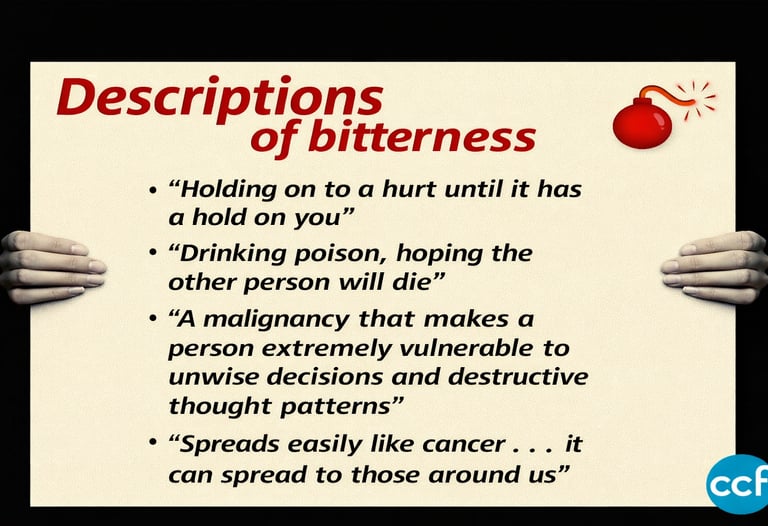
This verse reminds us to be watchful so that no one falls short of experiencing God’s grace. When a person fails to receive or respond to God’s grace, bitterness can begin to take root in the heart. Bitterness usually starts quietly—through hurt, disappointment, injustice, or unresolved offense. At first it may not be obvious, but like a root beneath the soil, it continues to grow beneath the surface.
Over time, that hidden root begins to influence attitudes, words, and relationships. Instead of remaining personal, bitterness spreads and affects others. It can damage unity, distort our perspective, and contaminate the spiritual atmosphere around us. That is why Scripture urges us to deal with it early. If it is not removed while it is small, it will eventually produce harmful fruit. Bitterness is a powerful tool the enemy uses to divide people, weaken faith, and destroy relationships. Therefore, we must rely on the grace of God to expose it and remove it before it grows deeper.
EPHESIANS 4:31 All bitterness, wrath, anger, clamor, and slander must be removed from you, along with all malice.
In this passage, Paul gives a direct instruction to intentionally remove attitudes that poison the heart and relationships. Bitterness is listed first because it often becomes the source of other destructive behaviors. When bitterness settles in the heart, it fuels anger, harsh words, and a spirit of hostility toward others.
Paul calls believers to actively put away these attitudes. This is not just about controlling outward behavior; it is about cleansing the inner life. Wrath, anger, shouting, slander, and malice are symptoms of a heart that has allowed resentment to remain. If these are not dealt with, they will damage both personal character and community relationships.
The command to remove these things shows that spiritual maturity requires deliberate action. Through the help of God’s grace and the work of the Holy Spirit, believers must choose to release resentment, refuse destructive speech, and reject harmful intentions toward others. A heart free from bitterness allows God’s love, peace, and kindness to grow instead.
2. Growing Roots of Betterness.
JEREMIAH 17:7 Blessed is the man who trusts in the Lord, And whose trust is the Lord. 8 For he will be like a tree planted by the water That extends its roots by a stream, And does not fear when the heat comes; But its leaves will be green, And it will not be anxious in a year of drought, Nor cease to yield fruit.
Trusting God does not mean life will be free from pressure, hardship, or difficult seasons. The “heat” and the “drought” represent times of testing, uncertainty, and lack. These seasons will come to everyone.
However, the one who trusts in the Lord is compared to a tree planted near a constant source of water. Because its roots reach the stream, it has access to what sustains it even when the environment becomes harsh. In the same way, a person who relies on God receives strength, peace, and grace from Him during difficult times. Instead of being controlled by fear or anxiety, that person remains spiritually alive and steady. Even in challenging seasons, their life continues to reflect God’s work, producing fruit that brings blessing to others.
PSALM 1:2 But his delight is in the Law of the Lord, And on His Law he meditates day and night. 3 He will be like a tree planted by streams of water, Which yields its fruit in its season, And its [c]leaf does not wither; And in whatever he does, he prospers.
To become spiritually rooted and stable, the key is a deep love for the Word of God and a habit of reflecting on it continually. Meditation here means thoughtfully considering God’s truth, allowing it to shape our thinking, decisions, and perspective on life.
When a person consistently fills their mind and heart with God’s Word, their life becomes firmly established, like a tree planted beside streams of water. The Word of God nourishes the soul, guiding a person toward wisdom and righteous living. As a result, their life becomes productive and purposeful, bringing forth fruit at the right time. Even when circumstances change, the influence of God’s truth keeps their life from drying up. Because their actions are guided by God’s wisdom, their efforts are directed toward what ultimately succeeds and honors Him.
GENESIS 50:19 But Joseph said to them, “Do not be afraid, for am I in God’s place? 20 As for you, you meant evil against me, but God meant it for good in order to bring about this present result, to keep many people alive.
Joseph’s response to his brothers reveals a heart that had already accepted God’s sovereignty long before this moment. After years of betrayal, slavery, and imprisonment, Joseph recognized that although his brothers intended harm, God was still working through those painful events to accomplish a greater purpose. By saying, “Am I in God’s place?” Joseph refused to take the role of judge or seek personal revenge.
This perspective allowed Joseph to grow roots of betterness instead of bitterness. Because he trusted that God was in control of his story, he could release the offense and extend forgiveness. Rather than focusing on the wrongdoing committed against him, Joseph focused on how God had used those circumstances to bring about preservation and blessing for many people. Surrendering to God’s sovereignty enabled Joseph to replace resentment with grace.
1 PETER 2:23 and while being abusively insulted, He did not insult in return; while suffering, He did not threaten, but kept entrusting Himself to Him who judges righteously;
Jesus provides the perfect model of how to respond when we are wronged. During intense suffering and humiliation, He did not retaliate with harsh words or threats. Instead, He chose to entrust Himself completely to the Father who judges with perfect righteousness. Jesus did not attempt to defend Himself through revenge or hostility; He left justice in God’s hands.
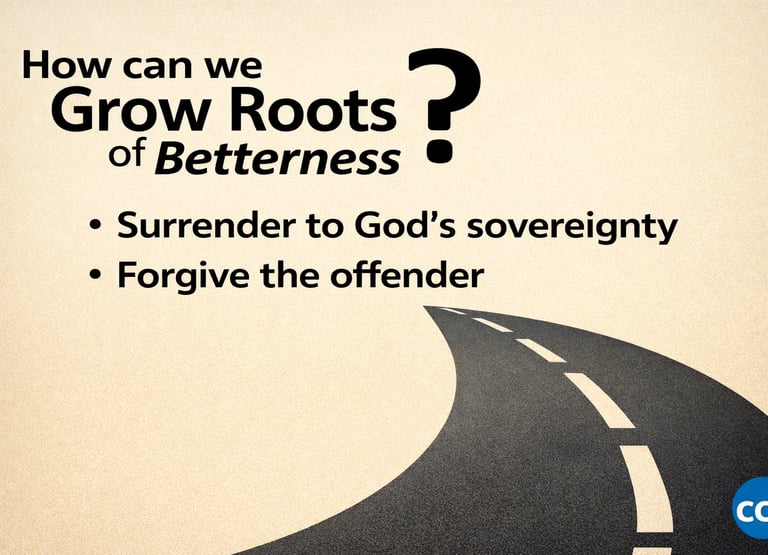
This shows that growing roots of betterness involves trusting God to handle what we cannot control. When we place the outcome in God’s care, we are freed from the burden of trying to settle every wrong ourselves. Entrusting our situation to God protects our hearts from becoming hardened and allows us to respond with humility and patience even in the face of injustice.
LUKE 23:34 [But Jesus was saying, “Father, forgive them; for they do not know what they are doing.”] And they cast lots, dividing His garments among themselves.
While suffering on the cross, Jesus demonstrated the depth of true forgiveness. Instead of condemning those who crucified Him, He prayed, “Father, forgive them; for they do not know what they are doing.” Even in extreme pain, His concern was for the spiritual condition of those who were harming Him.
This moment reveals that forgiveness is not dependent on whether offenders recognize their wrongdoing. People may continue acting according to their own choices, but the believer can still choose to release the offense before God. By asking the Father to forgive them, Jesus showed that mercy can overcome resentment. This kind of response grows roots of betterness in the heart and reflects the transforming grace of God.
PRAYER
Heavenly Father,
We come before You with humble hearts, thanking You for Your grace that sustains us every day. Thank You for reminding us through Your Word that we have a choice—to allow bitterness to grow in our hearts or to grow roots of betterness that bring life and blessing.
Lord, help us to trust in Your sovereignty just as Joseph did. When we face pain, injustice, or misunderstanding, teach us to believe that You are still at work, turning what was meant for evil into something good according to Your purpose. Help us surrender every situation to You, knowing that You are the righteous Judge who sees and understands all things.
Father, when we are hurt or wronged, guard our hearts from bitterness. Give us the grace to follow the example of our Lord Jesus Christ. When we are insulted, help us not to respond with harshness. When we suffer, help us to entrust ourselves to You who judge righteously.
Lord Jesus, You forgave even those who crucified You. Give us that same spirit of mercy. Teach us to release those who have offended us and to pray for them instead of holding resentment in our hearts. Remove every root of bitterness within us and replace it with Your love, peace, and forgiveness.
Plant our lives like trees by the streams of Your truth. As we meditate on Your Word and trust in You, let our roots grow deep in Your grace so that even in difficult seasons we will remain strong, fruitful, and full of life.
We surrender our hearts to You today. Help us choose betterness over bitterness, forgiveness over resentment, and trust over fear.
In the name of Jesus we pray,
Amen.
The content of this article is adapted from the source below:
Bitterness or Betterness

Get in touch for more insights.
Follow
Subscribe
info@themessageofgod.Some
123-456-7890
© 2025. All rights reserved.
By God’s grace, this website, The Message of God, was created to share His Word, encourage others in their faith, and lead people to a personal relationship with Jesus Christ. God has uniquely designed and equipped every believer to take part in His work, and this website is one small expression of that calling.
All glory, honor, and praise belong to God alone. I am deeply grateful to Christ’s Commission Fellowship (CCF)—God’s instrument in helping me know Jesus personally and grow in a deeper, more intimate relationship with Him. The messages shared here are inspired by past CCF sermons, which have greatly influenced my walk with the Lord.
The ultimate purpose of this website is to point people to Jesus, encourage them to follow Him wholeheartedly, and remind every reader that a life surrendered to Christ is a life filled with purpose, grace, and joy.