
God is Sovereign Part 2
Every person is to be in subjection to the governing authorities. For there is no authority except from God, and those which exist are established by God.
ROMANS 13:1
12/1/201311 min read
Our natural inclination is to resist obedience because, ever since the fall, the human heart has been bent toward independence, self-will, and pride. We prefer to do what seems right in our own eyes, to follow our desires, and to maintain control of our own choices. This inner resistance makes obedience feel restrictive rather than life-giving. But Scripture consistently teaches that obedience is not only necessary—it is the pathway to blessing, intimacy with God, spiritual maturity, and true freedom. When we obey God, we submit our imperfect wisdom to His perfect wisdom. We lay down our rebellious impulses and trust that His commands are for our good. Obedience shapes our character, aligns us with God’s purposes, and protects us from the destructive consequences of sin. Though our nature resists it, God, through His Spirit, enables us to desire and pursue obedience. In the end, obedience becomes less about pressure and more about love—responding to the One who knows us, saves us, and leads us into life.
Prayer:
Heavenly Father,
Thank You for reminding me that even though my human nature resists obedience, Your commands are always good, wise, and life-giving. Lord, I confess that many times I want to follow my own will instead of Yours. Please forgive my stubbornness and cleanse my heart from pride and self-reliance.
Father, teach me to obey You not out of fear, but out of love. Give me a willing spirit, a humble heart, and the strength of Your Holy Spirit to walk in Your ways. When my desires pull me in the wrong direction, help me remember that Your path leads to peace, joy, and blessing.
Thank You for Your patience, Your mercy, and Your grace that empowers me to grow. Make my obedience a reflection of my trust in You. Help me live a life that honors You in my thoughts, my choices, and my actions.
In Jesus’ name,
Amen.
ROMANS 13:1 Every person is to be in subjection to the governing authorities. For there is no authority except from God, and those which exist are established by God. 2 Therefore whoever resists authority has opposed the ordinance of God; and they who have opposed will receive condemnation upon themselves.
All governing authorities exist under God’s sovereignty. Even imperfect governments operate within God’s overarching plan to maintain order, restrain evil, and promote societal stability. When Paul wrote these words, believers lived under the Roman Empire—ruled by Nero, one of the most notoriously corrupt and brutal emperors in history. Despite this, Paul still affirmed that God allows governments to exist because the alternative—anarchy—leads to chaos, violence, and suffering.
To “submit to authority” does not mean approving every action or agreeing with every policy, nor does it mean remaining silent in the face of evil. But it does mean recognizing that authority has a God-given place in human society. Government, even when flawed, provides structure, justice systems, and protection from disorder. Without any form of authority, life becomes unsafe and unstable. Thus, resisting legitimate authority is—in principle—a resistance against the order God established for the world’s good.
At the same time, Scripture also teaches that obedience to human authority has limits: when the commands of man directly contradict the commands of God, “we must obey God rather than men”. Christians are called to be respectful, prayerful, and peace-loving citizens, while remaining loyal to God above all.
It is a call to humility, discernment, and trust in God’s perfect sovereignty, even when governments are imperfect.
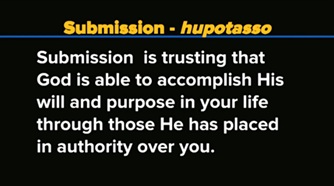
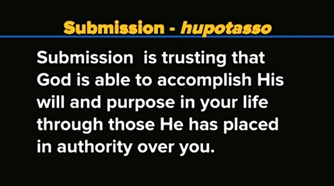
The word hupotassō, translated “be subject,” literally combines two Greek ideas: hupo, meaning “under,” and tassō, meaning “to place or arrange.” Together, it describes willingly placing oneself under an established order. This is crucial because it shows that submission to governing authorities in Romans 13 is not primarily about the human leaders themselves—it is about recognizing God’s structure for society. The focus shifts away from the character, merit, or morality of the authority figure and toward God, who designed authority for the purpose of order, protection, and stability. By using hupotassō, Paul teaches that when we submit to authority, we are responding to God’s arrangement rather than the person in power. It becomes an act of trust in God’s wisdom and sovereignty, not blind allegiance to flawed leaders. Even when governments are imperfect, the believer looks beyond them to the God who stands above all authority, making submission an expression of faith in Him rather than confidence in people.
ROMANS 13:3 For rulers are not a cause of fear for good behavior, but for evil. Do you want to have no fear of authority? Do what is good and you will have praise from the same... 6 For because of this you also pay taxes, for rulers are servants of God, devoting themselves to this very thing. 7 Render to all what is due them: tax to whom tax is due; custom to whom custom… honor to whom honor.
Governing authorities exist to promote order and restrain wrongdoing, which is why Paul says rulers are not a cause of fear for those who do good but for those who do evil. When we live righteously and responsibly, we generally have no reason to fear authority, because government is meant to protect, not harm. This is also why we pay taxes—because leaders, whether they recognize it or not, function as God’s servants in maintaining social structure. Paul is calling believers to render to each person what is due: taxes, customs, respect, and honor. This honor is not based on the personal worthiness of the leader but on the position God has ordained. True submission—hupotassō—is an attitude of the heart, a willing recognition of God’s design for authority.
Jesus Himself modeled this perfectly. He lived under one of the most abusive governments in history. Pilate, the Roman governor who sentenced Him, was unjust, politically motivated, and morally compromised. Yet Jesus remained respectful and submissive to the governing process, not because Pilate was good, but because Jesus trusted the sovereignty of His Father. By following Christ’s example, believers learn to honor authority out of reverence for God, not confidence in flawed leaders.
JOHN 19:10 So Pilate said to Him, “You do not speak to me? Do You not know that I have authority to release You, and I have authority to crucify You?” 11 Jesus answered, “You would have no authority over Me, unless it had been given you from above; for this reason he who delivered Me to you has the greater sin.”
Pontius Pilate reminds Jesus of his political power—the authority to release or crucify Him. From a human perspective, Pilate seems to hold absolute control over life and death. Yet Jesus calmly corrects him: no authority exists unless it is granted “from above.”
This statement reveals that earthly power is never ultimate. Political leaders may appear sovereign, but their authority is delegated and limited by God. Even in the injustice of the cross, God’s sovereign plan was unfolding. Human rulers act freely, yet they remain accountable to the higher authority of God. Christ’s words demonstrate that God’s rule stands above courts, governments, and empires.
JEREMIAH 27:6 Now I have given all these lands into the hand of Nebuchadnezzar king of Babylon, My servant …
Through the prophet Jeremiah, God declares that He has given surrounding lands into the hand of Nebuchadnezzar II, calling him “My servant.” This is striking because Nebuchadnezzar was a pagan conqueror, not a worshiper of Israel’s God.
The verse teaches that God is not limited to using righteous people to accomplish His will. He can raise even unbelieving rulers to fulfill divine purposes—whether for discipline, judgment, or restoration. Nebuchadnezzar’s victories were not merely military achievements; they were part of God’s larger redemptive plan for His people. This assures believers that international events and political shifts are never outside God’s oversight.
DANIEL 2:21 It is He who changes the times and the epochs; He removes kings and establishes kings …
In Daniel’s praise, he proclaims that God “changes the times and the epochs; He removes kings and establishes kings.” Here the focus expands beyond individual rulers to the entire flow of history. Dynasties rise and fall, administrations change, and seasons shift—but none of these happen randomly.
God governs not only who rules but also when they rule. He sets boundaries on power and determines its duration. This truth offers comfort in unstable political climates: no president, prime minister, or monarch holds office apart from God’s permission. Leaders are intended to function as servants under His higher authority, and when their time is complete, He has the power to replace them.
Submit to every human institution.
1 PETER 2:13 Submit yourselves for the Lord’s sake to every human institution, whether to a king as the one in authority... 8 Servants, be submissive to your masters with all respect, not only to those who are good and gentle, but also to those who are unreasonable.
Peter is reminding believers that their motivation is rooted in their relationship with God. They submit not because earthly rulers are always just, but because honoring authority brings honor to the Lord who established it. This gives submission a spiritual dimension: it becomes part of our witness to the world.
Submit to your own husbands.
1 PETER 3:1 In the same way, you wives, be submissive to your own husbands so that even if any of them are disobedient to the word, they may be won without a word by the behavior of their wives, 2 as they observe your chaste and respectful behavior.
Peter applies the same principle of God-centered submission to the marriage relationship. When he says, “In the same way,” he is directly connecting a wife’s submission to the broader biblical teaching on submission to authority for the Lord’s sake. This kind of submission is not rooted in weakness, inferiority, or silence, but in trust in God’s power to work through godly conduct. Even when a husband is disobedient to the Word, the wife’s respectful and pure behavior becomes a living testimony. Peter emphasizes that transformation does not always come through arguments or words, but through a consistent life that reflects Christlike character. By submitting from the heart, a wife places her confidence in God rather than trying to control or change her husband through force or pressure. Her conduct points beyond herself to God’s authority and grace, showing that true influence flows from obedience to Him, not from dominance or confrontation.
Obey the leaders of the church.
HEBREWS 13:17 Obey your leaders and submit to them, for they keep watch over your souls as those who will give an account. Let them do this with joy and not with grief, for this would be unprofitable for you.
Believers are called to obey and submit to their leaders because these leaders carry a serious responsibility—they “keep watch over your souls” and will one day give an account to God for how they have cared for those entrusted to them. This places both leaders and followers under God’s authority: leaders are accountable upward to God, and believers respond with trust and cooperation. Submission here is not about control or blind obedience, but about recognizing God’s order within the body of Christ for spiritual protection and growth. When believers submit with a willing heart, leaders are able to serve with joy rather than grief, which benefits the entire community. In this way, submission becomes mutual in its effect—leaders serve faithfully under God, and believers grow profitably by aligning themselves with God’s appointed care and oversight.
Submission to authority starts at home.
EPHESIANS 6:1 Children, obey your parents in the Lord, for this is right. 2 Honor your father and mother (which is the first commandment with a promise), 3 so that it may be well with you, and that you may live long on the earth.
Submission to authority begins in the home, where children first learn what it means to obey, honor, and respect those God has placed over them. Paul makes it clear that this obedience is not merely social training but spiritual formation. Honoring father and mother teaches children to recognize authority as God-given, and it establishes a foundation for how they will later respond to teachers, leaders, employers, and governing authorities. This command is unique because it carries a promise—that it may go well with them and that they may live long on the earth—showing that God attaches blessing to submission.
Teaching children to honor and obey is therefore not about control, but about guiding their hearts toward God’s order and protection. As parents lovingly exercise authority under God, children learn that submission brings peace, stability, and blessing. When they are taught to submit first to God and then to their parents, they begin to understand that authority is not an enemy but a gift designed for their good. In this way, the home becomes the training ground where obedience is learned, character is formed, and a lifelong pattern of honoring God through submission is established.
Obey God rather than Man.
When a believer disagrees with those in authority, Scripture points us not toward rebellion, but toward respectful appeal. Biblical submission does not mean silence or blind compliance; it means maintaining a submissive heart while engaging authority in a proper and orderly way. To appeal is to acknowledge the legitimacy of authority while presenting a reasoned and respectful counter proposal. This preserves honor, even in disagreement, and reflects trust in God’s order.
We see this principle throughout Scripture. Paul appealed to his Roman citizenship rather than resisting arrest. Daniel respectfully requested an alternative diet instead of defying the king’s command. Even Jesus spoke truth to authority without contempt or disrespect. In each case, the appeal was reasonable, measured, and conducted within the framework of submission. The posture was not “I reject your authority,” but “I recognize your authority, and I ask you to consider a better way.”
This approach keeps the heart aligned with God. It shows that our obedience is first to Him, while still honoring the structures He has established. By offering a thoughtful counter proposal rather than reacting in anger or rebellion, believers demonstrate wisdom, humility, and faith. In this way, submission and appeal work together—submission maintains respect, and appeal allows truth and conscience to be expressed without opposing God’s ordained authority.
ACTS 5:29 But Peter and the apostles answered, “We must obey God rather than men.
When Peter and the apostles declared, “We must obey God rather than men,” they were not being rebellious; they were being faithful. Human authority is real and God-ordained, but it is not absolute. When an authority demands what God forbids—such as stealing, cheating, lying, or breaking the law—submission to God requires refusal, even at great personal cost. In such moments, faith may mean being prepared to lose a job, a position, or security, trusting that obedience to God is worth more than any earthly gain. This kind of obedience reflects a settled conviction that God is the ultimate authority and provider. Choosing righteousness over convenience demonstrates that our loyalty belongs first to God, and it affirms that no command from man can override God’s truth or holiness.
EXODUS 1:17 But the midwives feared God, and did not do as the king of Egypt had commanded them, but let the boys live... 20 So God was good to the midwives, and the people multiplied, and became very mighty. 21 Because the midwives feared God, He established households for them.
This verse provides a clear biblical example of righteous disobedience rooted in the fear of God. Pharaoh, the highest authority in Egypt, issued a cruel and sinful command—to kill the Hebrew baby boys. The midwives were under legitimate authority, yet they recognized that this command directly violated God’s will and the sanctity of life. Because they feared God more than the king, they refused to obey his order. Their disobedience was not rebellious or self-serving; it was an act of faith and moral courage grounded in reverence for God.
God’s response is significant. Scripture says that God was good to the midwives and established households for them because they feared Him. This shows that when human authority commands what is evil, obedience to God takes precedence, and such obedience brings God’s approval and blessing.
God Guided David through Designated Authorities
God Guided Joseph through Designated Authorities
Prayer.
Heavenly Father,
We come before You acknowledging that all authority comes from You and that You are sovereign over every ruler, leader, and institution. Teach us to submit with humble hearts, not because people are perfect, but because You are perfect. Help us to honor those You have placed in authority and to live lives that reflect respect, order, and obedience for Your sake.
Lord, give us wisdom to discern when to submit, when to appeal, and when we must stand firm in obedience to You alone. Like the apostles, give us courage to say, “We must obey God rather than men.” Like the Hebrew midwives, help us to fear You more than any earthly power, refusing to participate in what is sinful, unjust, or dishonest, even when it costs us comfort, position, or security.
Teach us to train our children in our homes to honor, respect, and obey authority, beginning with obedience to You. May our submission be from the heart—hupotassō—willingly placing ourselves under Your divine order. When we face unjust or unreasonable authority, help us to respond with grace, respect, and truth, trusting that You see all and judge righteously.
We place our lives, our work, our families, and our future in Your hands. Strengthen us to walk in obedience, for we know that obedience brings blessing and that fearing You is the beginning of wisdom.
In the name of Jesus Christ, our perfect example of submission and faith,
Amen.
The content of this article is adapted from the source below:
Attributes of God - God is in Charge: Hupotasso

Get in touch for more insights.
Follow
Subscribe
info@themessageofgod.Some
123-456-7890
© 2025. All rights reserved.
By God’s grace, this website, The Message of God, was created to share His Word, encourage others in their faith, and lead people to a personal relationship with Jesus Christ. God has uniquely designed and equipped every believer to take part in His work, and this website is one small expression of that calling.
All glory, honor, and praise belong to God alone. I am deeply grateful to Christ’s Commission Fellowship (CCF)—God’s instrument in helping me know Jesus personally and grow in a deeper, more intimate relationship with Him. The messages shared here are inspired by past CCF sermons, which have greatly influenced my walk with the Lord.
The ultimate purpose of this website is to point people to Jesus, encourage them to follow Him wholeheartedly, and remind every reader that a life surrendered to Christ is a life filled with purpose, grace, and joy.