
Respond in Faith
for we walk by faith, not by sight—
2 CORINTHIANS 5:7
7/13/20146 min read
Opening Prayer
Heavenly Father,
We come before You with humble hearts, grateful for Your presence in our lives. Thank You for reminding us that we are called to walk by faith and not by sight. As we study Your Word today, open our eyes to understand Your truth and soften our hearts to receive it. Teach us to trust You even when circumstances are difficult and unclear. Help us not to react in fear, but to respond in faith, knowing that You are in control of all things. Guide our thoughts, our words, and our decisions, so that everything we do will honor You.
In Jesus’ name,
Amen.
2 CORINTHIANS 5:7 for we walk by faith, not by sight—
The Christian life is not driven by outward appearances or immediate circumstances but by trust in God’s unseen reality. Faith is not a momentary reaction but a consistent way of living. When situations appear unfavorable or confusing, the believer is called not to be controlled by emotions or impulses, but to respond with confidence in God’s character and promises. Walking by faith means choosing God’s perspective over human perception.
GENESIS 26
1 Now there was a famine in the land, besides the previous famine that had occurred in the days of Abraham. So Isaac went to Gerar, to Abimelech king of the Philistines. 2 The Lord appeared to him and said, “Do not go down to Egypt; stay in the land of which I shall tell you. 3 Sojourn in this land and I will be with you and bless you, for to you and to your descendants I will give all these lands, and I will establish the oath which I swore to your father Abraham.
In the middle of a crisis, Isaac receives a clear direction from God that goes against what seems logical. Instead of seeking relief in a more secure or prosperous place, he is instructed to remain where he is. This reveals that God’s guidance often challenges human reasoning. Faith is expressed by trusting God’s instruction even when it does not align with visible solutions. The assurance of God’s presence becomes more important than the comfort of a better environment.
ISAIAH 30:1 “Woe to the rebellious children,” declares the Lord, “Who execute a plan, but not Mine, And make an alliance, but not of My Spirit, In order to add sin to sin; 2 Who proceed down to Egypt Without consulting Me, To take refuge in the safety of Pharaoh And to seek shelter in the shadow of Egypt!
These verses highlight the danger of making decisions independently of God. Acting without seeking His will reflects misplaced confidence in human strategies. The issue is not the action itself, but the source of direction and dependence. When people rely on their own plans without consulting God, they drift further away from His purpose. True faith begins with surrendering decision-making to Him.
ISAIAH 31:1 Woe to those who go down to Egypt for help And rely on horses, And trust in chariots because they are many And in horsemen because they are very strong, But they do not look to the Holy One of Israel, nor seek the Lord!
Relying on visible strength and human resources can create a false sense of security. Faith calls believers to look beyond what appears strong and dependable in the world and instead anchor their confidence in God. Trusting Him requires humility, recognizing that human power is limited and insufficient apart from His guidance.
GENESIS 26:4 I will multiply your descendants as the stars of heaven, and will give your descendants all these lands; and by your descendants all the nations of the earth shall be blessed; 5 because Abraham obeyed Me and kept My charge, My commandments, My statutes and My laws.”
God reaffirms His promise, not because of Isaac’s performance, but because of His covenant. This demonstrates that God’s faithfulness is rooted in His own character. Obedience is part of the journey, but it is ultimately God who ensures the fulfillment of His promises. This reminds believers to focus on God Himself rather than merely the blessings He gives, knowing that His plans are secure and intentional.
GENESIS 26:6 So Isaac lived in Gerar. 7 When the men of the place asked about his wife, he said, “She is my sister,” for he was afraid to say, “my wife,” thinking, “the men of the place might kill me on account of Rebekah, for she is beautiful.” 8 It came about, when he had been there a long time, that Abimelech king of the Philistines looked out through a window, and saw, and behold, Isaac was caressing his wife Rebekah.
Although Isaac initially obeys, fear exposes an area of weakness in his life. His response under pressure shows that faith is a process of growth, not perfection. Even those who follow God can struggle with fear and fall into old patterns. Yet, this moment becomes an opportunity for God to work in his life, revealing that faith matures through real-life challenges.
GENESIS 26:9 Then Abimelech called Isaac and said, “Behold, certainly she is your wife! How then did you say, ‘She is my sister’?” And Isaac said to him, “Because I said, ‘I might die on account of her.’ ” 10 Abimelech said, “What is this you have done to us? One of the people might easily have lain with your wife, and you would have brought guilt upon us.” 11 So Abimelech charged all the people, saying, “He who touches this man or his wife shall surely be put to death.”
Isaac’s failure is confronted, and through it, he learns an important lesson: God’s protection does not depend on human schemes. Even when he acts out of fear, God intervenes to preserve him. This shows that God’s grace continues despite human weakness. Correction, even from unexpected sources, can be used by God to bring awareness and growth.
PSALM 56:3 When I am afraid, I will put my trust in You. 4 In God, whose word I praise, In God I have put my trust; I shall not be afraid. What can mere man do to me?
These verses provide the proper response to fear. Instead of allowing fear to control decisions, it becomes a signal to turn toward God. Trust is not the absence of fear but the decision to rely on God in the midst of it. By focusing on His word and character, fear loses its power, and confidence in God takes its place.
GENESIS 26:12 Now Isaac sowed in that land and reaped in the same year a hundredfold. And the Lord blessed him,
Isaac demonstrates practical faith by taking action despite unfavorable conditions. He does what is within his responsibility and leaves the outcome to God. This balance between human effort and divine provision is essential. Faith does not eliminate responsibility; it directs it. Obedience in difficult circumstances becomes the channel through which God’s blessing flows.
PROVERBS 3:5 Trust in the Lord with all your heart And do not lean on your own understanding. 6 In all your ways acknowledge Him, And He will make your paths straight.
These verses summarize the posture of a life lived in faith. Trusting God fully means letting go of self-reliance and acknowledging Him in every decision. When God is consistently included in one’s life, He provides direction and clarity. Faith is not passive; it actively seeks God’s guidance and depends on His wisdom.
GENESIS 26:13 and the man became rich, and continued to grow richer until he became very wealthy;
The result of Isaac’s journey shows that true prosperity comes from God alone. His growth is not attributed to location, connections, or personal ability, but to divine blessing. This reinforces the truth that security and success are found in God’s hands. When faith is placed in Him, He is the one who brings increase according to His purpose.
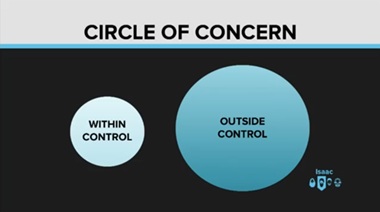
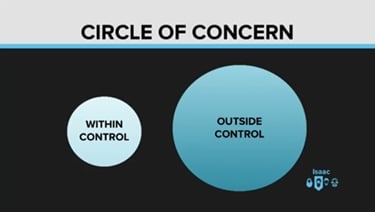
There are things within our control and things outside our control, and faith is knowing the difference between the two.
In the life of Isaac, this truth becomes very practical. Isaac could not control the famine—he could not make the rain fall, change the economy, or remove the crisis. Those were outside his control, and therefore, they belonged to God. However, Isaac could control his obedience, his decisions, and his actions. When God told him to stay, he stayed. When it was time to sow, he sowed. That was his responsibility.
This is exactly what it means to respond in faith. Instead of reacting in fear and trying to control everything—like going to Egypt without God’s direction—Isaac learned to focus on what God asked him to do and trust God with the results. Faith is not passive; it is active obedience in what we can do, while fully trusting God with what we cannot do.
The danger comes when we reverse this: we worry about things outside our control and neglect what is within our responsibility. That leads to fear, anxiety, and wrong decisions. But when we align ourselves with this principle, we experience peace and clarity. We do our part, and we let God do His part.
Closing Prayer
Lord God,
Thank You for speaking to us through Your Word today. We are reminded that our security is not found in people, places, or circumstances, but in You alone. Help us to carry this truth into our daily lives—that in every trial, every fear, and every uncertainty, we will choose to trust You. Strengthen our faith so that we may obey You even when it is difficult. Teach us to rely on Your wisdom and not our own understanding. May our lives reflect a steady walk with You, bringing glory to Your name. We commit everything to You, trusting in Your promises and Your faithfulness.
In Jesus’ name,
Amen.
The content of this article is adapted from the source below:

Blessed to Bless - Respond in Faith: Make it a Habit
Get in touch for more insights.
Follow
Subscribe
info@themessageofgod.Some
123-456-7890
© 2025. All rights reserved.
By God’s grace, this website, The Message of God, was created to share His Word, encourage others in their faith, and lead people to a personal relationship with Jesus Christ. God has uniquely designed and equipped every believer to take part in His work, and this website is one small expression of that calling.
All glory, honor, and praise belong to God alone. I am deeply grateful to Christ’s Commission Fellowship (CCF)—God’s instrument in helping me know Jesus personally and grow in a deeper, more intimate relationship with Him. The messages shared here are inspired by past CCF sermons, which have greatly influenced my walk with the Lord.
The ultimate purpose of this website is to point people to Jesus, encourage them to follow Him wholeheartedly, and remind every reader that a life surrendered to Christ is a life filled with purpose, grace, and joy.