
Rest in the Goodness of God
Come to Me, all you who labor and are heavy laden, and I will give you rest.
MATTHEW 11:28
3/9/201418 min read
GENESIS 6:5 Then the Lord saw that the wickedness of man was great on the earth, and that every intent of the thoughts of his heart was only evil continually.
This verse reveals the true condition of humanity before the flood: not just outward sin, but a deeply corrupted heart. Every intention, every inclination, was continually evil. This shows that God’s judgment was not impulsive—it was a righteous response to persistent, unrepentant sin. His holiness cannot ignore what completely opposes His nature.
LUKE 17:22 Then He said to the disciples, “The days will come when you will desire to see one of the days of the Son of Man, and you will not see it. 23 And they will say to you, ‘Look here!’ or ‘Look there!’ Do not go after them or follow them. 24 For as the lightning that flashes out of one part under heaven shines to the other part under heaven, so also the Son of Man will be in His day. 25 But first He must suffer many things and be rejected by this generation. 26 And as it was in the days of Noah, so it will be also in the days of the Son of Man: 27 They ate, they drank, they married wives, they were given in marriage, until the day that Noah entered the ark, and the flood came and destroyed them all.
Jesus draws a direct parallel between the days of Noah and the time before His return. What stands out is not extreme wicked acts being listed, but ordinary life—eating, drinking, marrying. These are not sinful in themselves. The issue is spiritual indifference. People were fully absorbed in earthly concerns, living as though God’s warning did not matter.
They were not ignorant because there was no warning—they were unaware because they chose not to listen. Noah’s life and the ark itself stood as a testimony, yet the people continued undisturbed. Their focus on temporal things blinded them to eternal reality.
This is where the ark becomes profoundly significant. The ark was not merely a vessel of survival—it was God’s appointed means of salvation. In the same way, Christ is not just a teacher or example, but the only refuge from coming judgment. The dividing line has always been clear: those who entered the ark were saved; those who remained outside perished.
To “take heed” of God’s warning, then, is more than awareness—it is a response of faith. It means turning to God and entrusting oneself fully to His provision, which is ultimately fulfilled in Christ.
JOHN 5:24 “Truly, truly, I say to you, he who hears My word, and believes Him who sent Me, has eternal life, and does not come into judgment, but has passed out of death into life.
This is such a powerful promise. Jesus declares that the one who hears and believes has already crossed over—from death to life. Judgment is no longer ahead of them because it has, in effect, already been dealt with through Christ.
PRAYER
Heavenly Father,
Thank You for Your Word that warns us and points us to truth. You are holy and just, yet full of mercy. Forgive us for the times we become distracted by the things of this world and neglect what truly matters.
Lord, open our hearts to hear Your voice and to take Your warning seriously. Help us not to live in spiritual indifference, but to walk in faith and obedience. Thank You for providing salvation through Jesus Christ—our refuge and our Ark.
Teach us to remain in Him, trusting fully in Your promise that we have passed from death to life.
In Jesus’ name,
Amen.
GENESIS 8
1 But God remembered Noah and all the beasts and all the cattle that were with him in the ark; and God caused a wind to pass over the earth, and the water subsided.
After 150 days of relentless flooding, Noah and those with him remained inside the ark for many more months—nearly a full year in total. Scripture records no direct word from God during that time. The silence must have been heavy. Yet Noah did not complain, and there is no record of despair overtaking those inside the ark. This highlights a reality of faith: God’s silence is not His absence.
When the text says “God remembered Noah,” it does not suggest that God had forgotten and then suddenly recalled him. God is omniscient—He does not forget. In Scripture, to remember means God turns His attention toward someone in order to act faithfully on a prior commitment. It signals movement—from promise to fulfillment.
At the appointed time, God acted. The wind blew, the waters receded, and deliverance began. What seemed like delay was actually perfect timing under divine control. God had been present all along, sustaining Noah even in the silence.
1. REMEMBER GOD’S FAITHFULNESS.
PSALM 10:1 Why do You stand afar off, O Lord? Why do You hide Yourself in times of trouble?
David gives voice to a struggle familiar to every believer: the feeling that God is distant in times of trouble. This is not a statement of doctrine, but an honest expression of human experience.
Faith does not deny these emotions—it brings them before God. David’s question reflects how circumstances can obscure our awareness of God’s nearness, even though His presence never changes.
MATTHEW 27:46 …“My God, My God, why have You forsaken Me?”
On the cross, Jesus echoes Psalm 22, entering into the depth of human anguish. In that moment, He bears the weight of sin and experiences the judgment that sin deserves.
This cry reveals the cost of our salvation. Jesus endures separation so that those who trust in Him will never be truly forsaken. What feels like abandonment to us was, for Him, a real and necessary suffering to accomplish redemption.
2 CORINTHIANS 1:8 For we do not want you to be unaware, brethren, of our affliction which came to us in Asia, that we were burdened excessively, beyond our strength, so that we despaired even of life;
Paul speaks of a burden so heavy that he lost hope even of surviving. This shows that deep distress is not a sign of weak faith.
HEBREWS 10:17“And their sins and their lawless deeds I will remember no more.”
God does not lose awareness of sin; rather, He chooses not to hold it against those who are in Christ. Because of Jesus’ finished work, believers are no longer treated according to their sins, but according to His righteousness. Forgiveness is not forgetfulness—it is a deliberate act of grace grounded in Christ’s sacrifice.
GENESIS 19:29 Thus it came about, when God destroyed the cities of the valley, that God remembered Abraham, and sent Lot out of the midst of the overthrow, when He overthrew the cities in which Lot lived.
When God rescued Lot from the destruction of Sodom, it was tied to His covenant relationship with Abraham. God acted in faithfulness to His promise.
This shows that God’s “remembering” is often connected not only to individuals, but to His larger redemptive plan and covenant commitments.
2. EXPECT NEW THINGS.
2 CORINTHIANS 5:17 Therefore if anyone is in Christ, he is a new creature; the old things passed away; behold, new things have come.
This verse declares a present reality, not a future possibility. In Christ, a person is already made new. The foundation of change is not our effort, but our identity. Yet many struggle to see this change because their focus is fixed on what they can do for God rather than on what God has already done in them. Transformation does not begin with striving—it begins with being united to Christ. When we understand that we are new by His grace, we stop trying to manufacture change and start living from the new life He has given. Growth then becomes the outworking of what God has already established within us.
PHILIPPIANS 3:12 Not that I have already obtained it or have already become perfect, but I press on so that I may lay hold of that for which also I was laid hold of by Christ Jesus. 13 Brethren, I do not regard myself as having laid hold of it yet; but one thing I do: forgetting what lies behind and reaching forward to what lies ahead,
Paul’s pursuit is not an attempt to earn something from Christ, but a response to what Christ has already done for him. He presses on because he has first been “laid hold of” by Jesus. This shifts the focus from human effort to divine initiative. At the same time, Paul refuses to be anchored to his past—whether failures or achievements. Looking back can hinder growth, either by producing guilt or false confidence. Instead, he fixes his direction forward, toward Christ. True progress in the Christian life comes not from revisiting the past, but from continually setting our focus on Jesus. As our attention remains on Him rather than on ourselves or our history, we are steadily shaped into His likeness.
GENESIS 8:2 Also the fountains of the deep and the floodgates of the sky were closed, and the rain from the sky was restrained;
Noah had no power to change his situation. The flood that surrounded him was beyond human control, and no effort from inside the ark could alter it. The turning point came only when God acted—He restrained the rain and shut the sources of the waters. This shows that deliverance was entirely God’s initiative. Left to himself, Noah would have remained where he was. In the same way, true change in our lives does not come from our own ability, but from God intervening and altering what we cannot.
GENESIS 1:2 The earth was formless and void, and darkness was over the surface of the deep, and the Spirit of God was moving over the surface of the waters.
At creation, the Spirit of God—ruach—was actively present over the waters, bringing order out of chaos. The same word translated “wind” also refers to the Spirit, revealing that God’s transforming power is personal and active. What was formless and empty became structured and full because the Spirit was at work. This establishes a pattern: where God’s Spirit moves, change begins.
EXODUS 14:21 Then Moses stretched out his hand over the sea; and the Lord swept the sea back by a strong east wind all night and turned the sea into dry land, so the waters were divided.
Again, God uses a “wind” (ruach) as the means of deliverance. Israel stood helpless before the sea, unable to create a path for themselves. Yet through the wind sent by God, what seemed impossible became a way of escape. This was not human effort, but divine intervention. The same God who moved over the waters in creation now moves to make a path for His people.
JOHN 3:6 That which is born of the flesh is flesh, and that which is born of the Spirit is spirit. 7 Do not be amazed that I said to you, ‘You must be born again.’ 8 The wind blows where it wishes and you hear the sound of it, but do not know where it comes from and where it is going; so is everyone who is born of the Spirit.”
Jesus connects the idea of wind and Spirit, showing that spiritual life comes from the unseen work of God. Just as the wind cannot be controlled or fully understood, so the work of the Spirit is sovereign and powerful. New birth is not achieved by human effort—it is brought about by the Spirit. True inner change happens not by striving, but by being born and renewed through Him.
ACTS 2:1 When the day of Pentecost had come, they were all together in one place. 2 And suddenly there came from heaven a noise like a violent rushing wind, and it filled the whole house where they were sitting. 3 And there appeared to them tongues as of fire distributing themselves, and they rested on each one of them. 4 And they were all filled with the Holy Spirit and began to speak with other tongues, as the Spirit was giving them utterance.
At Pentecost, the coming of the Holy Spirit is again associated with wind. This marks a new phase in God’s work—His Spirit now indwells His people. The disciples, once fearful and uncertain, were transformed and empowered. The change was immediate and evident, not because of their own strength, but because they were filled with the Spirit. What began as promise became personal experience.
GENESIS:4 And the ark rested in the seventh month, on the seventeenth day of the month, upon the mountains of Ararat.
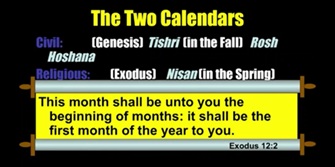
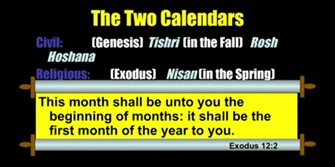
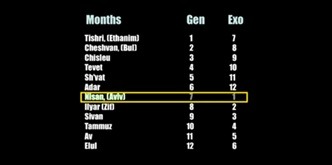
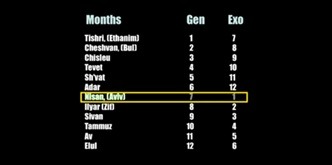
The Bible presents two ways of reckoning time using the same set of months but with different starting points. The civil calendar begins in Tishri (around September–October) and is connected to creation and everyday life, governing agricultural, social, and national events. In contrast, the religious calendar begins in Nisan (around March–April), established in Exodus 12:2 at the time of Israel’s deliverance from Egypt, and is centered on worship and God’s redemptive acts, beginning with Passover. Thus, Tishri is the first month in the civil sense but the seventh in the religious, while Nisan is the first in the religious sense but the seventh in the civil. Together, these two perspectives show that while life begins physically at creation, God defines a deeper beginning through redemption—teaching that true new life starts not merely with birth, but with salvation.
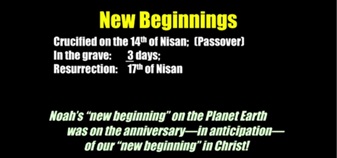
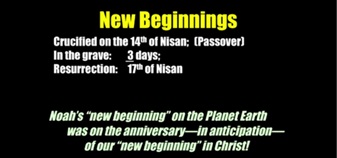
When the ark came to rest on the mountains of Ararat, it marked the end of judgment and the beginning of restoration. This was not accidental—God was signaling a transition from destruction to new life. The name Ararat is often associated with the idea of a curse being reversed. In that sense, the resting of the ark points forward to a greater reality: in Christ, the curse is lifted and a new beginning is established. Just as Noah emerged into a renewed world, those who are in Christ enter a new life grounded in God’s saving work.
GALATIANS 3:10 For as many as are of the works of the law are under the curse; for it is written, “Cursed is everyone who does not continue in all things which are written in the book of the law, to do them.” 11 But that no one is justified by the law in the sight of God is evident, for “the just shall live by faith.” 12 Yet the law is not of faith, but “the man who does them shall live by them.” 13 Christ has redeemed us from the curse of the law, having become a curse for us (for it is written, “Cursed is everyone who hangs on a tree”),14 that the blessing of Abraham might come upon the Gentiles in Christ Jesus, that we might receive the promise of the Spirit through faith.
This passage explains the problem of the curse and God’s solution. The law demands perfect obedience, and anyone who relies on it is placed under a curse because no one can fully keep it. But Christ took that curse upon Himself through His death on the cross. Because of this, righteousness is no longer based on human effort but received by faith. The result is not only justification, but also the promise of the Holy Spirit. Instead of striving to earn God’s approval, believers are called to trust in what Christ has already accomplished.
1 CORINTHIANS 15:51 Behold, I tell you a mystery: We shall not all sleep, but we shall all be changed— 52 in a moment, in the twinkling of an eye, at the last trumpet…
Paul reveals a future transformation that will happen instantly when Christ returns. This change is not gradual or achieved through effort—it is a complete work of God. What began spiritually in salvation will be fully realized in glorification. This reminds us that the new beginning God gives is both present and future: we are already made new in Christ, and one day that newness will be perfectly completed.
1 JOHN 3:2 Beloved, now we are children of God; and it has not yet been revealed what we shall be, but we know that when He is revealed, we shall be like Him, for we shall see Him as He is. 3 And everyone who has this hope in Him purifies himself, just as He is pure.
Believers are already called children of God, yet their full transformation is still to come. The promise is that when Christ appears, we will be like Him. This future hope has a present effect—it leads to a purified life. Change, therefore, is not driven by pressure to perform, but by a clear vision of Christ. As we fix our attention on Him, our lives are gradually shaped to reflect His character.
TITUS 2:11 For the grace of God has appeared, bringing salvation to all men, 12 instructing us to deny ungodliness and worldly desires and to live sensibly, righteously and godly in the present age, 13 looking for the blessed hope and the appearing of the glory of our great God and Savior, Christ Jesus, 14 who gave Himself for us to redeem us from every lawless deed, and to purify for Himself a people for His own possession, zealous for good deeds.
Grace is not only about forgiveness; it is also about transformation. The same grace that brings salvation also teaches and empowers believers to live godly lives. It trains us to reject sin and pursue righteousness while we wait for Christ’s return. This shows that godly living is not produced by human willpower alone, but by grace actively working within us. As we look to Christ and live in light of His coming, His grace continues to shape us into a people set apart for Him.
GENESIS:8 Then he sent out a dove from him, to see if the water was abated from the face of the land; 9 but the dove found no resting place for the sole of her foot, so she returned to him into the ark, for the water was on the surface of all the earth. Then he put out his hand and took her, and brought her into the ark to himself. 10 So he waited yet another seven days; and again he sent out the dove from the ark. 11 The dove came to him toward evening, and behold, in her beak was a freshly picked olive leaf. So Noah knew that the water was abated from the earth. 15 Then God spoke to Noah…
Noah sent out the dove to discern the condition of the earth. At first, it returned because there was no place to rest—indicating that the environment was not yet ready. Later, the dove came back with an olive leaf, a sign that life had begun to emerge again. This shows that God was not only removing judgment, but also preparing provision before calling Noah out. When God finally spoke, it confirmed that the time was right. Noah did not act based on signs alone—he waited for God’s word. This reflects a principle: God prepares the way fully, and His timing ensures that when He leads, everything needed is already in place.
ROMANS 10:17 So then faith comes by hearing, and hearing by the word of God.
Faith is not produced by circumstances or visible signs, but by receiving God’s word. While Noah saw evidence through the dove, his final action depended on what God said. In the same way, real faith is anchored in God’s voice, not merely in what we observe. When we listen and respond to His word, we align ourselves with His will. Even our ability to obey is sustained by His grace, enabling us to walk forward into the new things He has prepared.
GENESIS 9
1 And God blessed Noah and his sons and said to them, “Be fruitful and multiply, and fill the earth. 2 The fear of you and the terror of you will be on every beast of the earth and on every bird of the sky; with everything that creeps on the ground, and all the fish of the sea, into your hand they are given. 3 Every moving thing that is alive shall be food for you; I give all to you, as I gave the green plant. 4 Only you shall not eat flesh with its life, that is, its blood. 5 Surely I will require your lifeblood; from every beast I will require it. And from every man, from every man’s brother I will require the life of man... 7 As for you, be fruitful and multiply; Populate the earth abundantly and multiply in it.” 8 Then God spoke to Noah and to his sons with him, saying, 9“ Now behold, I Myself do establish My covenant with you, and with your descendants after you; 10 and with every living creature that is with you, the birds, the cattle, and every beast of the earth with you; of all that comes out of the ark, even every beast of the earth. 11 I establish My covenant with you; and all flesh shall never again be cut off by the water of the flood, neither shall there again be a flood to destroy the earth.” 12 God said, “This is the sign of the covenant which I am making between Me and you and every living creature that is with you, for all successive generations; 13 I set My bow in the cloud, and it shall be for a sign of a covenant between Me and the earth.
God blesses Noah and gives humanity a new beginning, commanding them to multiply and fill the earth. He also expands His provision by allowing people to eat animals, while setting boundaries to show that life is sacred, especially through the command concerning blood. Then God establishes a covenant with Noah, his descendants, and all living creatures. Unlike human agreements, this covenant depends entirely on God’s faithfulness, not human effort. He promises that the earth will never again be destroyed by a flood. As a sign, He sets the rainbow in the sky—a visible reminder that He takes His promise seriously and will surely fulfill it.
3. SAVOR GOD’S COVENANT.
To savor something is to enjoy it slowly, deeply, and with full attention—not just experiencing it, but truly appreciating it. In a spiritual sense, to savor God or His Word means not just reading or knowing it, but dwelling on it, delighting in it, and letting it shape your heart.
REVELATION 4:3 And He who sat there was like a jasper and a sardius stone in appearance; and there was a rainbow around the throne, in appearance like an emerald.
The rainbow appears in heaven surrounding God’s throne, showing that His covenant is always before Him. God does not need a reminder, but He gives this sign so that we may be assured of His faithfulness. Even in His position as Judge and King, His promises remain firm. The rainbow declares that His actions are consistent with His word—He will not again destroy the whole earth with a flood. It is a visible testimony that His mercy stands alongside His authority.
REVELATION 10:1 I saw still another mighty angel coming down from heaven, clothed with a cloud. And a rainbow was on his head, his face was like the sun, and his feet like pillars of fire.
The rainbow appears again, now associated with a messenger of God. This shows that God’s covenant is not only remembered but also carried forward in His ongoing work. It emphasizes that everything God does is in harmony with His promises. The presence of the rainbow highlights His seriousness—what He has spoken, He will surely accomplish.
4 .TURN YOUR STORMS TO WORSHIP.
GENESIS 8:20 Then Noah built an altar to the Lord, and took of every clean animal and of every clean bird and offered burnt offerings on the altar. 21 The Lord smelled the soothing aroma; and the Lord said to Himself, “I will never again curse the ground on account of man, for the intent of man’s heart is evil from his youth; and I will never again destroy every living thing, as I have done. 22 While the earth remains, Seedtime and harvest, And cold and heat, And summer and winter, And day and night Shall not cease.”
After leaving the ark, Noah’s first act was to worship God. He built an altar and offered sacrifices, expressing gratitude for deliverance and acknowledging God as the source of his new beginning. The offering was pleasing to God, not merely because of the act itself, but because it reflected a heart that recognized His grace. In response, God declared that He would sustain the order of the world—seedtime and harvest, seasons, and day and night would continue. This shows that God is sovereign over creation and faithful to preserve it. Worship, then, is the proper response to God’s saving work and His ongoing care over our lives.
EPHESIANS 5:2 And walk in love, as Christ also has loved us and given Himself for us, an offering and a sacrifice to God for a sweet-smelling aroma.
This verse reveals that the ultimate acceptable offering to God is Christ Himself. His sacrifice is what fully satisfies God. Therefore, true worship is not based on our efforts alone, but on our relationship with Christ. As we walk in His love and live in light of His sacrifice, our lives become pleasing to God. Worship is acceptable because it is rooted in what Jesus has already done.
ROMANS 12:1 I beseech you therefore, brethren, by the mercies of God, that you present your bodies a living sacrifice, holy, acceptable to God, which is your reasonable service.
In response to God’s mercy, believers are called to offer their entire lives to Him. This is not about external rituals, but about daily surrender—using our bodies, actions, and lives for God’s purposes. True worship is lived out, not just spoken. It is a continual offering of ourselves, set apart for Him, flowing from gratitude for His grace.
MATTHEW 11:28 Come to Me, all you who labor and are heavy laden, and I will give you rest. 29 Take My yoke upon you and learn from Me, for I am gentle and lowly in heart, and you will find rest for your souls. 30 For My yoke is easy and My burden is light.”
Jesus invites those who are weary to come to Him, not to carry burdens alone, but to walk with Him. The weariness often comes from striving in our own strength or seeking recognition for what we do. Taking His yoke means entering into partnership with Him—still walking and serving, but no longer relying on ourselves. Instead of working for our own purposes, we walk with Christ, finding rest because He carries the weight.
PRAYER
Heavenly Father,
Thank You for Your faithfulness and for giving us a new beginning through Your grace. Teach us to worship You with sincere hearts, not relying on our own strength but on what Christ has done for us. Help us to offer our lives as a living sacrifice, pleasing and honoring to You. Remind us daily that You are in control, and lead us to walk with You, not in striving, but in rest. May Your Spirit guide us, transform us, and keep our focus on Jesus.
In Jesus’ name,
Amen.
The content of this article is adapted from the source below:

Follow God's Design - Rest Well: God Remembers You
Get in touch for more insights.
Follow
Subscribe
info@themessageofgod.Some
123-456-7890
© 2025. All rights reserved.
By God’s grace, this website, The Message of God, was created to share His Word, encourage others in their faith, and lead people to a personal relationship with Jesus Christ. God has uniquely designed and equipped every believer to take part in His work, and this website is one small expression of that calling.
All glory, honor, and praise belong to God alone. I am deeply grateful to Christ’s Commission Fellowship (CCF)—God’s instrument in helping me know Jesus personally and grow in a deeper, more intimate relationship with Him. The messages shared here are inspired by past CCF sermons, which have greatly influenced my walk with the Lord.
The ultimate purpose of this website is to point people to Jesus, encourage them to follow Him wholeheartedly, and remind every reader that a life surrendered to Christ is a life filled with purpose, grace, and joy.