
Spur One Another
and let us consider how to stimulate one another to love and good deeds,
HEBREWS 10:24
4/6/20148 min read
PRAYER
Heavenly Father,
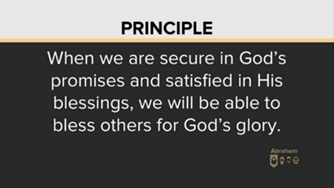
Thank You for Your faithful promises that give us security and peace. Teach us to rest fully in Your truth and to find deep satisfaction in the blessings that come from You alone. Guard our hearts from seeking fulfillment in the things of this world, and instead anchor us in Your presence.
Lord, as You fill us, make us a blessing to others. Help us to encourage, uplift, and spur one another toward love and good works—not for our own recognition, but for Your glory. Let our lives reflect Your goodness, so that through us, others may see Your grace and be drawn to You.
We trust You, we depend on You, and we offer ourselves to be used by You.
In Jesus’ name,
Amen.
GENESIS 14
1 And it came about in the days of Amraphel king of Shinar, Arioch king of Ellasar, Chedorlaomer king of Elam, and Tidal king of Goiim, 2 that they made war with Bera king of Sodom, and with Birsha king of Gomorrah, Shinab king of Admah, and Shemeber king of Zeboiim, and the king of Bela (that is, Zoar). 3 All these came as allies to the valley of Siddim (that is, the Salt Sea). 4 Twelve years they had served Chedorlaomer, but the thirteenth year they rebelled... 8 And the king of Sodom and the king of Gomorrah and the king of Admah and the king of Zeboiim and the king of Bela (that is, Zoar) came out; and they arrayed for battle against them in the valley of Siddim, 9 against Chedorlaomer king of Elam and Tidal king of Goiim and Amraphel king of Shinar and Arioch king of Ellasar—four kings against five. 10 Now the valley of Siddim was full of tar pits; and the kings of Sodom and Gomorrah fled, and they fell into them. But those who survived fled to the hill country. 11 Then they took all the goods of Sodom and Gomorrah and all their food supply, and departed. 12 They also took Lot, Abram’s nephew, and his possessions and departed, for he was living in Sodom.
The narrative reveals a clash between powerful coalitions, where human strength, political alliances, and military dominance seem to determine outcomes. Yet beneath the surface, it exposes the instability of relying on worldly systems. The defeat of the southern kings and the capture of Lot highlight how proximity to a corrupt environment can gradually lead to deeper entanglement and vulnerability. What began as Lot merely choosing a fertile land has now progressed into full identification with a place destined for judgment. In contrast, Abram stands apart—not only geographically but spiritually—positioned in quiet faithfulness and covenant relationship with God.
13 Then a fugitive came and told Abram the Hebrew. Now he was living by the oaks of Mamre the Amorite, brother of Eshcol and brother of Aner, and these were allies with Abram.
The term “Hebrew” is commonly understood to mean “one who crosses over” or “one from the other side.” The mention of Abram as a “Hebrew” subtly marks him as one set apart, one who has “crossed over” from trusting in the world to trusting in God. The passage ultimately contrasts two ways of life: one rooted in visible security that quickly collapses, and another grounded in unseen trust that endures.
2 SAMUEL 7:18 Then David the king went in and sat before the Lord, and he said, “Who am I, O Lord God, and what is my house, that You have brought me this far?
The posture of David reflects a heart that recognizes the overwhelming grace of God. Rather than entitlement, there is deep humility—an awareness that everything he has received is undeserved. This attitude mirrors the faith of Abram, whose righteousness was not earned but credited through belief. Both lives demonstrate that true blessing is not merely about material increase or external success, but about being recipients of God’s unmerited favor. Such a mindset guards the heart from pride and self-reliance, anchoring it instead in gratitude and worship.
GENESIS 14:14 When Abram heard that his relative had been taken captive, he led out his trained men, born in his house, three hundred and eighteen, and went in pursuit as far as Dan. 15 He divided his forces against them by night, he and his servants, and defeated them, and pursued them as far as Hobah, which is north of Damascus. 16 He brought back all the goods, and also brought back his relative Lot with his possessions, and also the women, and the people.
Abram demonstrates that true faith expresses itself through decisive and sacrificial action. Though he had every reason to remain uninvolved—especially considering Lot’s earlier choices—he chose to intervene at great personal cost and risk. This reveals a heart shaped by grace: he saw his resources, influence, and strength not as possessions to protect, but as tools to serve and rescue others. His willingness to act shows that being blessed by God carries a responsibility to pursue the good of others, even when it is inconvenient or undeserved. Abram’s actions reflect a life free from bitterness, where grace overcomes past grievances and compels him to restore rather than withdraw.
COLOSSIANS 3:13 bearing with one another, and forgiving each other, whoever has a complaint against anyone; just as the Lord forgave you, so also should you.
Forgiveness becomes the foundation of relationships, not because others always deserve it, but because grace has first been extended to us. When we truly grasp how much we have been forgiven, it reshapes how we respond to offenses. Instead of holding on to resentment, we are called to release others, reflecting the character of Christ. This kind of forgiveness is not natural—it is a conscious choice rooted in humility and gratitude, allowing grace to flow through us rather than stopping with us.
GALATIANS 6:1 Brethren, even if anyone is caught in any trespass, you who are spiritual, restore such a one in a spirit of gentleness; each one looking to yourself, so that you too will not be tempted.
Spiritual maturity is seen in how we respond to the failures of others. Rather than condemning or distancing ourselves, we are called to gently pursue those who have gone astray, aiming to bring them back with compassion and self-awareness. This requires both courage and humility, recognizing that we too are vulnerable. Restoration is not about superiority, but about love that seeks healing, reflecting God’s desire to redeem rather than discard.
HEBREWS 10:24 and let us consider how to stimulate one another to love and good deeds, 25 not forsaking our own assembling together, as is the habit of some, but encouraging one another; and all the more as you see the day drawing near.
Believers are meant to actively invest in one another’s growth. Spiritual life is not meant to be lived in isolation, but in mutual encouragement and intentional fellowship. By gathering together and speaking life into each other, we help stir faith, strengthen commitment, and inspire godly action. In a world that often pulls people away from devotion, this shared encouragement becomes essential in remaining steadfast and purposeful.
2 TIMOTHY 2:24 The Lord’s bond-servant must not be quarrelsome, but be kind to all, able to teach, patient when wronged, 25 with gentleness correcting those who are in opposition, if perhaps God may grant them repentance leading to the knowledge of the truth, 26 and they may come to their senses and escape from the snare of the devil, having been held captive by him to do his will.
Whether forgiving, restoring, or encouraging, everything must be done with gentleness, patience, and kindness. Even when dealing with opposition or wrongdoing, the goal is not to win arguments but to win people. Such a posture reflects trust in God’s work in hearts, acknowledging that true transformation comes from Him. This kind of grace-filled approach protects relationships, honors God, and creates space for repentance and renewal.
GENESIS 14:17 Then after his return from the defeat of Chedorlaomer and the kings who were with him, the king of Sodom went out to meet him at the valley of Shaveh (that is, the King’s Valley). 18 And Melchizedek king of Salem brought out bread and wine; now he was a priest of God Most High. 19 He blessed him and said, “Blessed be Abram of God Most High, Possessor of heaven and earth; 20 And blessed be God Most High, Who has delivered your enemies into your hand.” He gave him a tenth of all.
Instead of celebrating military success or personal achievement, the moment centers on worship and recognition of God’s sovereignty. Melchizedek acknowledges that the triumph did not ultimately come from Abram’s strength but from the hand of God who rules over heaven and earth. This encounter redirects the focus from human accomplishment to divine provision. Abram’s response demonstrates humility and reverence, recognizing that everything he has gained is under God’s authority and belongs to Him. The interaction shows that genuine faith responds to God’s deliverance with gratitude and worship rather than self-exaltation.
HEBREWS 7:1 This Melchizedek was king of Salem and priest of God Most High. He met Abraham returning from the defeat of the kings and blessed him, 2 and Abraham gave him a tenth of everything. First, the name Melchizedek means “king of righteousness”; then also, “king of Salem” means “king of peace.” 3 Without father or mother, without genealogy, without beginning of days or end of life, resembling the Son of God, he remains a priest forever.
The significance of Melchizedek is further unfolded, revealing him as a figure that foreshadows a greater and eternal priesthood. His identity transcends normal human structures, emphasizing a priesthood not based on lineage or law, but on a divine and enduring order. This points forward to Jesus Christ, who perfectly fulfills what Melchizedek represents—an eternal mediator who unites kingship and priesthood in one person. The connection emphasizes that God’s redemptive plan was already being revealed long before the formal systems of the law were established.
GENESIS 14:21 The king of Sodom said to Abram, “Give the people to me and take the goods for yourself.” 22 Abram said to the king of Sodom, “I have sworn to the Lord God Most High, possessor of heaven and earth, 23 that I will not take a thread or a sandal thong or anything that is yours, for fear you would say, ‘I have made Abram rich.’ 24 I will take nothing except what the young men have eaten, and the share of the men who went with me, Aner, Eshcol, and Mamre; let them take their share.”
Abram’s response to the offer from the king of Sodom reveals a heart that values God’s honor above personal gain. Though he had every opportunity to enrich himself, he deliberately refused anything that might shift recognition away from God’s provision. His decision demonstrates a deep confidence in the promises of God and a refusal to allow worldly sources to claim credit for the blessings he expected from the Lord alone. By rejecting the reward, Abram protected the testimony of his faith, showing that his trust rested entirely in God’s ability to provide and fulfill His covenant.
MARK 14:22 While they were eating, He took some bread, and after a blessing He broke it, and gave it to them, and said, “Take it; this is My body.” 23 And when He had taken a cup and given thanks, He gave it to them, and they all drank from it. 24 And He said to them, “This is My blood of the covenant, which is poured out for many.
The symbolism of bread and wine reaches its ultimate fulfillment in Christ. What once appeared in the meeting between Abram and Melchizedek becomes a profound expression of redemption through Jesus’ sacrifice. The elements point beyond themselves to the giving of Christ’s own life for humanity, establishing a new covenant grounded in grace and forgiveness. Through this act, Jesus reveals that the greatest deliverance is not from earthly enemies but from sin itself. The meal becomes a lasting reminder that salvation and blessing come through His self-giving love, inviting believers to remember and live in the reality of that sacrifice.
PRAYER
Heavenly Father,
We humbly acknowledge that every victory and blessing comes from You. Teach us to trust in Your power, not our own, and guard our hearts from pride. Help us to forgive freely, restore gently, and encourage others with grace.
Lord Jesus, our King and High Priest, thank You for Your sacrifice. May we live in gratitude, giving back to You from hearts that are truly thankful.
Strengthen us to walk by faith, trust in Your promises, and live for Your glory alone.
In Jesus’ name,
Amen.
The content of this article is adapted from the source below:

Blessed to Bless - Be a Blessing: Make Your Move
Get in touch for more insights.
Follow
Subscribe
info@themessageofgod.Some
123-456-7890
© 2025. All rights reserved.
By God’s grace, this website, The Message of God, was created to share His Word, encourage others in their faith, and lead people to a personal relationship with Jesus Christ. God has uniquely designed and equipped every believer to take part in His work, and this website is one small expression of that calling.
All glory, honor, and praise belong to God alone. I am deeply grateful to Christ’s Commission Fellowship (CCF)—God’s instrument in helping me know Jesus personally and grow in a deeper, more intimate relationship with Him. The messages shared here are inspired by past CCF sermons, which have greatly influenced my walk with the Lord.
The ultimate purpose of this website is to point people to Jesus, encourage them to follow Him wholeheartedly, and remind every reader that a life surrendered to Christ is a life filled with purpose, grace, and joy.