
The Goodness of God Part 2
But from the beginning of creation, God created them male and female.
MARK 10:6
1/15/202612 min read
GENESIS 2
4. God gave us RELATIONSHIPS.
18 Then the Lord God said, “It is not good for the man to be alone; I will make him a helper suitable for him.”
God knows what we need even before we recognize it ourselves. He is our ultimate Helper, and out of His wisdom and goodness, He invented family. God designed companionship as part of His perfect plan and gave us a partner who complements us—not to compete with us, but to walk alongside us in unity and purpose.
The name LORD comes from the Hebrew word YHWH, which is derived from the verb meaning “to be.” This reveals God as the self-existent, eternal One—the “I AM,” who has always been and will always be. As the ever-present God, YHWH is faithful to provide, sustain, and meet our deepest needs, including our need for relationship and community.
Prayer
Heavenly Father,
We thank You for Your wisdom and goodness. You know what we need even before we ask, and You have shown us that it is not good for us to be alone. You are our faithful Helper, the great I AM, the ever-present God who sustains our lives. Thank You for inventing family and for the gift of companionship, love, and partnership.
Lord, help us to honor the relationships You have given us. Teach us to walk in humility, love, and unity with one another. May our families reflect Your grace, Your faithfulness, and Your purpose. Above all, remind us that our true help comes from You, the One who was, who is, and who is to come.
We trust You, YHWH, and we rest in Your perfect design for our lives.
In Jesus’ name, Amen.
EXODUS 3:14 And God said to Moses, “I AM WHO I AM”; and He said, “This is what you shall say to the sons of Israel: ‘I AM has sent me to you.’”
In a world filled with false gods, the Lord revealed Himself by a unique and personal name. He did not define Himself by location, role, or limitation, but simply as “I AM.” This name declares that God is self-existent, eternal, and unchanging. He depends on nothing outside Himself and remains faithful in every generation. By revealing His name, God assured His people that the One who sent them was the living and ever-present Lord, sufficient for every need.
ISAIAH 43:10 …So that you may know and believe Me And understand that I am He. Before Me there was no God formed, And there will be none after Me. 11 I, only I, am the Lord, And there is no savior besides Me.
Here, the Lord calls His people to know, believe, and understand who He truly is. He alone is eternal and uncreated, with no rivals before or after Him. These verses reject all false gods and affirm that salvation belongs exclusively to the Lord. He is not one among many—He is the only true God and the only Savior.
JOHN 8:58 Jesus said to them, “Truly, truly I say to you, before Abraham [s]was born, I am.” 59 Therefore they picked up stones to throw at Him…
By declaring “I AM,” Jesus deliberately identified Himself with the divine name revealed in Exodus. This was not merely a claim of preexistence, but a clear assertion of His eternal and divine identity. The immediate reaction of the crowd shows they understood His claim as equality with God. In this moment, Scripture affirms that Jesus shares the identity and nature of YHWH. He is not merely a teacher or prophet, but the eternal I AM—God revealed in the flesh to bring salvation to His people.
19 And out of the ground the Lord God formed every animal of the field and every bird of the sky, and brought them to the man to see what he would call them; and whatever the man called a living creature, that was its name. 20 The man gave names to all the livestock, and to the birds of the sky, and to every animal of the field, but for Adam there was not found a helper suitable for him. 21 So the Lord God caused a deep sleep to fall upon the man, and he slept; then He took one of his ribs and closed up the flesh at that place. 22 And the Lord God fashioned into a woman the rib which He had taken from the man, and brought her to the man. 23 Then the man said, “At last this is bone of my bones, And flesh of my flesh; She shall be called ‘woman,’ Because [v]she was taken out of man.” 24 For this reason a man shall leave his father and his mother, and be joined to his wife; and they shall become one flesh. 25 And the man and his wife were both naked, but they were not ashamed.
In this passage, God entrusted Adam with meaningful work. By bringing the animals to him to be named, God was giving Adam authority and responsibility. In Scripture, naming signifies governance and stewardship. Adam was acting as God’s representative on earth—ruling under God’s authority, exercising wisdom, and participating in God’s creative order. This task affirmed Adam’s dignity and purpose: he was created not merely to exist, but to work, govern, and reflect God’s rule over creation.
Yet through this process, a divine truth was revealed—none of the animals was a suitable helper for Adam. Authority and work alone were not enough; Adam was created for relationship. God Himself recognized that something was missing and lovingly provided a partner who was equal in nature, complementary in role, and perfectly suited for him. The creation of woman shows that human flourishing requires both responsibility and relationship, work and companionship, authority and love—designed by God from the beginning.
GENESIS 2
MARK 10:6 But from the beginning of creation, God created them male and female. 7 For this reason a man shall leave his father and mother, 8 and the two shall become one flesh; so they are no longer two, but one flesh. 9 Therefore, what God has joined together, no person is to separate.” 10 And in the house the disciples again began questioning Him about this. 11 And He *said to them, “Whoever divorces his wife and marries another woman commits adultery against her; 12 and if she herself divorces her husband and marries another man, she is committing adultery.”
Marriage is not a cultural invention or a temporary arrangement—it is rooted in God’s purposeful design. A man and a woman leave their families of origin and are joined together by God Himself, becoming one flesh. This union is sacred and covenantal, not casual or conditional.
God’s design for marriage is commitment. Jesus makes it clear that marriage is meant to be lifelong, and that divorce violates God’s intention for faithfulness and unity. When two people marry, it is not merely a human contract; God is actively involved. Marriage is God-joined, God-witnessed, and God-protected.
Another essential part of God’s design is that marriage is between one man and one woman. This is not based on preference or tradition, but on God’s creative order established “from the beginning.” Jesus affirms Genesis and shows that marriage reflects God’s intentional design for complementarity, unity, and fruitfulness.
Finally, God’s design for marriage includes character transformation. Marriage is one of God’s primary tools for shaping our hearts—teaching us sacrificial love, patience, forgiveness, humility, and faithfulness. Through the daily realities of married life, God exposes selfishness and grows Christlike character in both husband and wife. Marriage is not merely about personal happiness, but about holiness—becoming more like Christ as we learn to love one another in covenant faithfulness.
PROVERBS 5:18 Let your fountain be blessed, And rejoice in the wife of your youth. 19 Like a loving doe and a graceful mountain goat, Let her breasts satisfy you at all times; Be exhilarated always with her love.
God blesses marital intimacy, calls for exclusive faithfulness, and desires spouses to delight in one another. Sexual love, when lived according to God’s design, is not a temptation to avoid but a gift to cherish within the covenant of marriage.
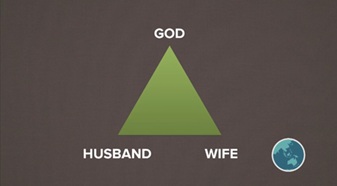
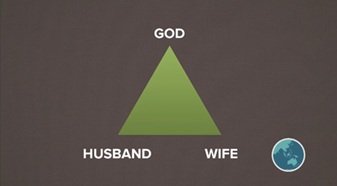
Marriage is strongest when both husband and wife are closest to God. As a couple draws near to the Lord, they grow closer to one another; when they drift away from God, they also drift apart. The purpose of marriage is oneness and intimacy—physical, emotional, and spiritual. True oneness is only possible when both partners are spiritually connected to God, because we are not merely physical beings but spiritual beings in human bodies. God’s design for marriage is to put Him first, allowing Him to be the foundation that sustains unity, intimacy, and lasting love.
Role of Wives
JOB 31:12 She does him good and not evil All the days of her life.
This verse describes a wife whose life consistently brings blessing to her husband. Her presence strengthens, supports, and builds him up rather than tearing him down. This does not speak of control or superiority, but of influence—her words, actions, and character shape the atmosphere of the home.
HEBREWS 6:9 This hope we have as an anchor of the soul, a hope both sure and reliable…
This verse teaches that our hope in God is “an anchor of the soul, both sure and reliable.” An anchor keeps a ship steady in storms, and in the same way, hope in God stabilizes the heart in every season of life. When a wife places her hope in the Lord, her security comes from God’s faithfulness, not from changing human circumstances.
God never intended husbands, finances, children, or circumstances to carry the weight of ultimate hope. These are good gifts, but they are limited and imperfect. When hope is placed in them, disappointment and anxiety easily follow. But when hope is anchored in God, there is peace, confidence, and strength that do not depend on external conditions.
If hope is not rooted in God, insecurity often takes over. This insecurity can lead to being overly demanding, constantly seeking reassurance, or becoming emotionally needy—asking people to give what only God can provide. God alone is the sure and reliable source of hope.
When a wife hopes in the Lord, she is free to love, serve, and support her family without fear. Her confidence rests in God’s promises, and her life becomes marked by stability, grace, and quiet strength, even in the midst of uncertainty.
HEBREWS 3:13 But encourage one another every day, as long as it is still called “today,”…
A wife plays a powerful role as her husband’s encourager—his cheerleader. To be his cheerleader is to intentionally affirm him through words and actions. Daily encouragement builds confidence, strengthens resolve, and reminds him that he is not alone. Life is full of pressure, responsibility, and spiritual battles, and consistent affirmation helps guard his heart from discouragement and doubt.
Encouraging him does not mean ignoring flaws or avoiding truth, but choosing to speak life rather than criticism, hope rather than fear. When a wife affirms her husband’s efforts, character, and calling, she becomes a source of strength God uses to keep his heart tender and faithful. Daily encouragement fosters unity, deepens trust, and reflects God’s own heart—who continually strengthens His people through love, truth, and grace.
EPHESIANS 5:33 …and the wife must see to it that she respects her husband.
While love is essential in marriage, Scripture shows that respect is especially important to a man. Respect speaks to a man’s sense of worth, identity, and calling.
When a wife shows respect, she affirms her husband’s role, efforts, and responsibility. This includes the way she speaks to him, about him, and responds to him—both in private and in public. Respect builds confidence and strengthens a man’s desire to love, protect, and lead well. Conversely, a lack of respect can deeply wound and discourage him, even if love is present.
1 PETER 3:1 …you wives, be submissive to your own husbands… 5 For in this way in former times the holy women also, who hoped in God, used to adorn themselves, being submissive to their own husbands;
These verses addresses wives by pointing them first to their hope in God. Biblical submission is not rooted in fear, weakness, or blind obedience, but in trust—trust in God’s character and sovereignty. The passage emphasizes that holy women were able to be submissive because their security did not come from their husbands, but from the Lord.
When a wife truly hopes in God, she can entrust her husband to God. She does not have to control, manipulate, or carry the burden of every outcome. She trusts that God is at work in her husband’s life and that God is able to guide, correct, and shape him far better than she can. This does not mean silence in matters of truth or wisdom, but it does mean releasing ultimate control to God.
Because her hope is anchored in the Lord, she can also trust God to take care of her, regardless of her husband’s decisions. Her peace is not dependent on perfect leadership or flawless choices, but on God’s faithfulness. In this way, submission becomes an act of worship—placing confidence in God rather than in human strength—and the responsibility for decisions ultimately rests between her husband and God.
EPHESIANS 5:25 Husbands, love your wives, just as Christ also loved the church and gave Himself up for her,
A husband’s love is defined by Christ’s love for the church—self-giving, sacrificial, and unconditional. This love is not driven by feelings or convenience, but by commitment. Biblical headship is not control or dominance; it is servant leadership that places a wife’s well-being above personal interests. Such love nurtures safety, trust, and security, allowing marriage to reflect Christ’s care, patience, and faithfulness.
EPHESIANS 5:23 For the husband is the head of the wife, as Christ also is the head of the church, He Himself being the Savior of the body.
God calls husbands to responsible and accountable leadership patterned after Christ. This leadership involves initiative, protection, provision, and guidance—spiritually, emotionally, and practically. As Christ leads by serving and sacrificing, a husband is to lead with humility, integrity, and love, always for the benefit of his wife, never for personal power.
GALATIANS 3:28 There is neither Jew nor Greek, there is neither slave nor free man, there is neither male nor female; for you are all one in Christ Jesus.
In Christ, men and women share equal dignity, value, and inheritance. Biblical roles in marriage do not imply superiority or inferiority, but God-given responsibility and order. The husband’s role is to love and lead through service and sacrifice, while the wife’s role is to respond with respect and support. When these roles are understood as responsibilities rather than power positions, marriage reflects unity, peace, and the gospel of Christ.
Role of Husbands
Biblical Leadership Principles
1. No-Blame Principle
If you are the leader, you do not shift responsibility to others. Leadership means ownership. When something goes wrong, the leader looks inward first. Blame reveals abdication; responsibility reflects maturity.
2. Be the Example Principle
Leadership is lived, not declared. You lead more by what you practice than by what you say. Your life sets the direction. Others will follow your example long before they follow your instructions.
3. No-Excuse Principle
A leader does not justify disobedience, compromise, or passivity. Excuses weaken authority. God calls leaders to obedience, not explanations. Faithfulness matters more than comfort.
4. Assume Responsibility Principle
Leadership means stepping forward, not stepping back. Do not abdicate your role or wait for others to act. God holds leaders accountable for what they allow, tolerate, or ignore.
5. No-Stumbling Principle
Do not give others a reason to disobey God because of your behavior. Your life should never become an excuse for someone else’s compromise. Leaders are called to integrity, consistency, and godly influence.
6. No-Insecurity Principle
Your family is not looking for perfection, but for affirmation. Lead with confidence rooted in Christ, not insecurity. Encourage, affirm, and speak life. A secure leader produces secure followers.
7. No-Negligence Principle
You are called to disciple your children intentionally. Spiritual leadership does not happen by accident. Spend time with them, pray with them, open Scripture with them, and model devotion to God through consistent quiet time and intentional presence.
EPHESIANS 6:1 Children, obey your parents in the Lord, for this is right. 2 Honor your father and mother (which is the first commandment with a promise), 3 so that it may be well with you, and that you may live long on the earth.
Children are called to obey their parents in the Lord, because this is right and aligned with God’s order. Obedience is not merely about rules, but about learning respect, humility, and trust in the authority God has placed over them.
The command to honor father and mother goes beyond outward obedience. Honor includes attitude, words, and actions—showing respect, gratitude, and appreciation. God attaches a promise to this command: “that it may be well with you, and that you may live long on the earth.” This shows that honoring parents leads to blessing, stability, and well-being in life.
When children honor their parents, they are ultimately honoring God, because parents are God’s appointed authority in the home. This role teaches children how to relate rightly to authority and prepares them to live wisely under God’s guidance. God’s design for the family is that each role—husbands, wives, and children—works together to bring order, blessing, and glory to Him.
Role of Children
Prayer
Heavenly Father,
We come before You with humble and honest hearts. According to Your lovingkindness and great compassion, have mercy on us, O God. We acknowledge our sins and past mistakes before You. Wash us thoroughly from our iniquity and cleanse us from all our sin.
Lord, we do not come trusting in our own goodness, but in Your mercy and grace. Create in us a clean heart, O God, and renew a right and steadfast spirit within us. Teach us to walk in humility, to turn away from what displeases You, and to live in obedience to Your will.
Thank You that Your forgiveness is complete, Your mercy is greater than our failures, and Your love restores what was broken. We receive Your cleansing, Your peace, and the new beginning You offer.
In Jesus’ name, Amen.
PSALM 51:1 Be gracious to me, O God, according to Your lovingkindness; According to the greatness of Your compassion blot out my transgressions. 2 Wash me thoroughly from my iniquity And cleanse me from my sin.
The content of this article is adapted from the source below:
Follow God's Design - For Best Results, Follow God's Design

Contact
Get in touch for more insights.
Follow
Subscribe
info@themessageofgod.Some
123-456-7890
© 2025. All rights reserved.
By God’s grace, this website, The Message of God, was created to share His Word, encourage others in their faith, and lead people to a personal relationship with Jesus Christ. God has uniquely designed and equipped every believer to take part in His work, and this website is one small expression of that calling.
All glory, honor, and praise belong to God alone. I am deeply grateful to Christ’s Commission Fellowship (CCF)—God’s instrument in helping me know Jesus personally and grow in a deeper, more intimate relationship with Him. The messages shared here are inspired by past CCF sermons, which have greatly influenced my walk with the Lord.
The ultimate purpose of this website is to point people to Jesus, encourage them to follow Him wholeheartedly, and remind every reader that a life surrendered to Christ is a life filled with purpose, grace, and joy.